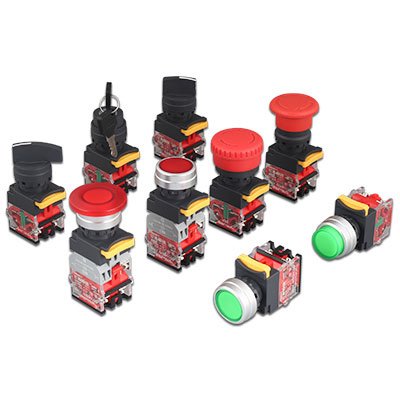
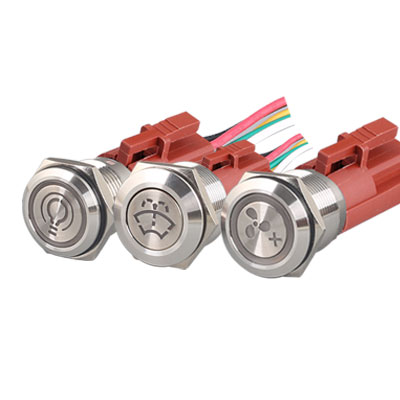
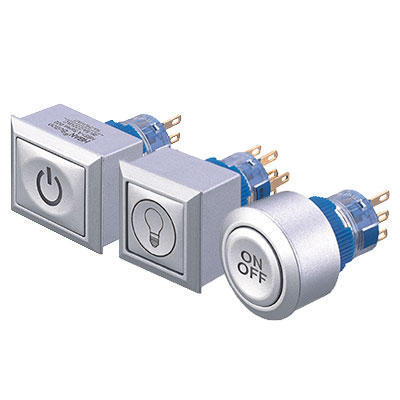
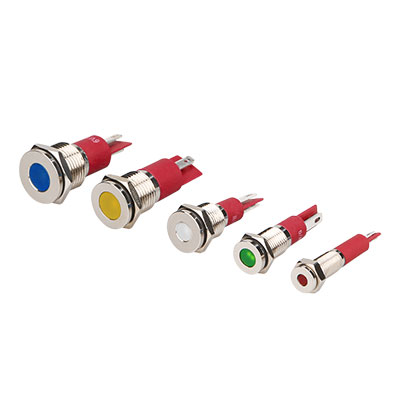
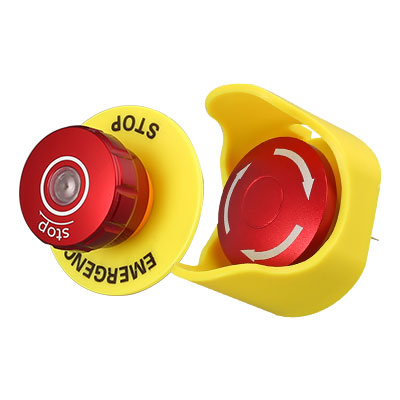


How to Choose IP65, IP67 & IP69K?| HBAN Push button
In industrial equipment and outdoor systems, the IP rating for push button switches plays a critical role in ensuring environmental protection and long-term reliability. A properly selected push button switch IP rating prevents dust ingress, water intrusion, corrosion, and electrical failure.
Therefore, understanding IP ratings is not merely technical knowledge — it is essential for ensuring long-term reliability and stable operation of push button switches.
This article begins with the fundamental definition of IP ratings and explains why they are so important in push button switch applications, as well as how to select the correct protection level.
1. What Is an IP Rating for Push Button Switches?
IP stands for Ingress Protection. The rating indicates the degree of protection provided by an enclosure against:
• Access to hazardous internal parts
• Ingress of solid foreign objects (dust, debris)
• Ingress of water
The rating format consists of two digits:
IPXY
• X = Protection against solid objects (0–6)
• Y = Protection against water (0–9)
Each digit is independently tested and certified according to defined laboratory conditions.

2. First Digit: Protection Against Solid Objects
The first digit indicates the level of protection against contact and solid particles.
| Level | Protection Description |
|---|---|
| 0 | No protection |
| 1 | Protection against objects ≥50mm (e.g., hand contact) |
| 2 | Protection against objects ≥12.5mm (finger contact) |
| 3 | Protection against objects ≥2.5mm (tools, wires) |
| 4 | Protection against objects ≥1mm (small tools, screws) |
| 5 | Dust protected (limited ingress permitted) |
| 6 | Dust tight (no ingress of dust) |
For industrial applications, a dustproof push button switch (IP6X) is strongly recommended to prevent dust ingress and ensure long-term electrical stability.
3. Second Digit: Protection Against Water
The second digit defines the enclosure's resistance to moisture under controlled test conditions.
| Level | Protection Description |
|---|---|
| 0 | No protection |
| 1 | Protection against vertically dripping water |
| 2 | Protection against dripping water when tilted up to 15° |
| 3 | Protection against spraying water (up to 60°) |
| 4 | Protection against splashing water from any direction |
| 5 | Protection against low-pressure water jets |
| 6 | Protection against powerful water jets |
| 7 | Protection against temporary immersion (up to 1m for 30 minutes) |
| 8 | Protection against continuous immersion (conditions specified by manufacturer) |
| 9K | Protection against high-pressure, high-temperature washdown |
When selecting a waterproof push button switch, it is important to distinguish between water jet protection (IPX5/IPX6) and immersion protection (IPX7/IPX8). Each test condition addresses a specific exposure scenario.
4. Why Dust Protection Is Critical for Push Button Switches?
Push button switches are typically mounted on equipment surfaces, making them one of the most exposed components in industrial environments.
Dust protection is especially important in environments such as:
- Metal fabrication workshops
- Woodworking facilities
- Cement plants
- Outdoor installations exposed to wind and sand
If dust enters the internal mechanism, it may lead to:
- Contact oxidation
- Mechanical sticking
- Increased contact resistance
- Reduced service life
For most industrial applications, IP6X (dust tight) protection is strongly recommended.

5. Why Water Protection Directly Impacts System Safety?
| Level | Protection Description |
|---|---|
| 1–2 | Protection against dripping water |
| 3–4 | Protection against spraying or splashing water |
| 5 | Protection against low-pressure water jets |
| 6 | Protection against powerful water jets |
| 7 | Temporary immersion (up to 1 meter for 30 minutes) |
| 8 | Continuous immersion (conditions specified by manufacturer) |
| 9K | High-pressure, high-temperature washdown |
Important: IPX7 or IPX8 does NOT automatically mean resistance to high-pressure water jets. Immersion testing and water jet testing are completely different conditions.
In practical applications:
For outdoor equipment, an IP65 push button switch is typically the minimum requirement. For areas with possible temporary submersion, an IP67 push button switch provides better sealing performance. In food and pharmaceutical washdown environments, an IP69K push button switch is recommended.
Selecting an incorrect water protection level may result in:
- Internal corrosion
- Electrical short circuits
- Equipment shutdown
- Increased maintenance costs
6. How IP Ratings Directly Affect Switch Reliability?
An IP rating directly determines:
- Whether internal components remain uncontaminated
- Long-term stability of electrical contacts
- Seal durability under environmental stress
- Overall product service life
For example:
- Using IP54 in heavy dust environments → performance degradation over time
- Using IP54 outdoors → possible rainwater intrusion
- Using IP67 in washdown areas → may not withstand high-pressure cleaning
Improper selection of the IP (Ingress Protection) rating is one of the most common causes of premature equipment failure.
7. How to Choose the Right IP Rating for Push Button Switches?
Understanding how to choose the right IP rating for push button switches helps prevent over-specification and unnecessary cost increases.
When selecting a push button switch, consider: Dust concentration in the operating environment Exposure to rain or water spray Possibility of temporary immersion Cleaning procedures (manual cleaning vs. high-pressure washdown) Indoor versus outdoor installation Cost-performance balance
| Environment | Typical Recommended IP |
|---|---|
| Indoor equipment | IP40–IP54 |
| Industrial machinery | IP54–IP65 |
| Outdoor exposed systems | IP65 or higher |
| Marine or high-moisture environments | IP67 |
| Washdown environments | IP69K |
The highest IP rating is not always the best choice. The optimal solution is the rating that matches the real environmental conditions.
Too low → Reliability risks
Too high → Unnecessary cost increase
8.IP65 vs IP67 vs IP69K: What's the Difference?
The difference between IP65, IP67, and IP69K push button switches lies in their resistance to water exposure:
- IP65: Protection against dust and low-pressure water jets
- IP67: Protection against dust and temporary immersion
- IP69K: Protection against dust and high-pressure, high-temperature washdown

9. Installation Conditions Also Affect Protection Performance
IP certification applies under defined testing and installation conditions.
For panel-mounted push button switches:
- They must be installed into a properly sealed panel of specified thickness
- Sealing gaskets must remain intact
- Mounting hole dimensions must meet specifications
- Correct tightening torque must be applied
Improper installation can reduce the actual protection level below the rated value.
10. Conclusion: IP Ratings Determine True Reliability
The IP rating system provides a clear and standardized method for evaluating enclosure protection.
For push button switches, its importance is reflected in:
- Environmental adaptability
- Electrical safety
- Extended service life
- Reduced maintenance costs
- Compliance with industry standards
Rather than blindly choosing the highest rating available, selecting the most suitable protection level for your specific application ensures long-term stable performance and cost efficiency.
The IP rating system provides a clear and standardized method for evaluating enclosure protection. For push button switches, selecting the correct IP rating directly affects environmental adaptability, electrical safety, long-term durability, and overall system reliability.
Whether your application requires an IP65 push button switch for outdoor equipment, an IP67 switch for high-moisture environments, or an IP69K push button switch for washdown applications, choosing the right protection level ensures stable performance and cost efficiency.
If you are selecting push button switches for industrial, outdoor, marine, or washdown environments, working with an experienced manufacturer can help you avoid over-specification, reduce costs, and ensure long-term reliability.
11. Work with a Reliable Push Button Switch Manufacturer
At HBAN, we provide a full range of IP-rated push button switches, including IP65, IP67, and IP69K models designed for demanding industrial environments.
Our products offer:
- Dust-tight and waterproof sealing
- Stable electrical performance
- Long mechanical life
- Compliance with international standards
- Customizable options for panel thickness and installation requirements
If you are unsure which IP rating best suits your application, our engineering team is ready to assist you with technical recommendations and product selection.
Contact us today to discuss your project requirements or request a product specification sheet.
Get product prices Industrial Push Button IEC 60947-5-1 vs IEC 60947-5-5 | HBAN Push button
 What Is a Laser Engraved Push Button Switch? | HBAN Push button
 Industrial Push Button Stations for Conveyor Systems | HBAN Push button
 Salt-Ready 12mm Plastic Switches for Aussie Marine & Outdoor